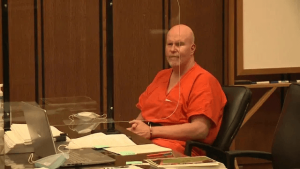
For more than three decades, John Tiedjen lived with a murder conviction stemming from the 1989 death of his roommate and stepbrother, Brian McGary, in Cleveland, Ohio. Tiedjen was convicted of McGary’s murder and sentenced to prison, but years later, questions surrounding the original investigation, crime-scene evidence, and previously unavailable materials brought renewed scrutiny to the case. As Tiedjen sought a new trial, his defense team turned to forensic analysis to examine a fundamental question: What did the physical evidence actually show? That question brought Evidence Room and forensic crime-scene reconstruction expert Scott Roder into the case.
 Returning to the Scene Through Forensic Reconstruction
Decades after an incident occurs, reconstructing a crime scene presents unique challenges. The physical scene may no longer exist in its original condition, witnesses’ memories may have changed, and evidence can be incomplete or unavailable. The reconstruction process, therefore, depends heavily on a careful examination of the remaining materials. Evidence Room reviewed available case materials, including police reports, crime-scene information, photographs, testimony, and other documentation associated with McGary’s death. The objective was to analyze the physical circumstances of the shooting and evaluate whether the evidence supported the theory that had been used to convict Tiedjen. Using forensic crime-scene reconstruction and digital visualization, the Evidence Room team examined the positioning of the individuals and objects within the scene and considered how the documented physical evidence related to possible scenarios surrounding McGary’s death. The resulting reconstruction provided a visual framework through which the evidence could be examined spatially and chronologically. Rather than relying solely on written descriptions of what may have occurred, the reconstruction enabled consideration of the physical relationships within the scene in a three-dimensional environment.
A Different Interpretation of the Physical Evidence
Evidence Room’s analysis challenged significant aspects of the prosecution’s original theory of the case. During hearings on Tiedjen’s motion for a new trial in May and June 2021, Roder testified regarding his analysis and the crime-scene reconstruction performed by Evidence Room. The Cuyahoga County Court of Common Pleas recognized Roder as an expert in crime-scene reconstruction and heard his testimony as part of the defense’s presentation. Based on Evidence Room’s reconstruction and forensic review, Roder testified that the physical evidence did not support the conclusion that Tiedjen had murdered McGary. The reconstruction presented an alternative scenario concerning McGary’s death and illustrated how the physical evidence could be evaluated differently from the theory advanced at Tiedjen’s original trial. The work demonstrated one of the most important purposes of forensic reconstruction: to test a theory against the physical evidence. A reconstruction cannot change the evidence. Instead, it can help determine whether a proposed sequence of events is physically consistent with the documented scene. Measurements, positioning, trajectories, photographs, and other available evidence can be brought together to evaluate whether a theory works when examined as a complete physical event.
 When New Evidence Changes the Picture
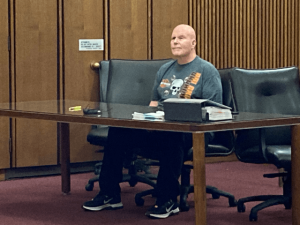
The renewed proceedings in Tiedjen’s case also involved questions concerning crime-scene photographs and other evidence that the defense argued had not been available at the time of the original trial. When additional evidence becomes available years after a conviction, forensic experts may be able to examine a case from a perspective that was unavailable to the original jury. Advances in forensic visualization and reconstruction technology can also provide new ways of organizing and presenting complex evidence.
In the Tiedjen case, Evidence Room’s work helped transform decades of reports, photographs, testimony, and physical evidence into a reconstruction that could be examined and presented in court. The goal was not simply to create an animation. It was to use the available evidence to analyze the physical circumstances of the incident and visually demonstrate the findings of that analysis.
 A Case Reconsidered
In August 2021, the Cuyahoga County Court of Common Pleas granted John Tiedjen’s motion for a new trial, giving him another opportunity to challenge the conviction that had kept him incarcerated for decades. The decision brought renewed attention to the circumstances surrounding Brian McGary’s death and reopened questions about the evidence that had been used to establish what occurred. After so many years, the case once again became the subject of legal and forensic scrutiny, demonstrating how evidence from a decades-old investigation can take on new significance when examined through a modern and independent lens.
Evidence Room’s involvement in the case represents the important role that independent forensic review can play in post-conviction matters. When a case is reopened years—or even decades—after the original investigation, experts have a responsibility to return to the available evidence without assuming that the original theory or interpretation must be correct. That process requires separating facts from assumptions, carefully reviewing the original documentation, and determining whether the physical evidence supports, contradicts, or leaves unanswered the conclusions previously reached. For Evidence Room, the John Tiedjen case demonstrates why forensic reconstruction is about far more than creating a visual presentation. The purpose of a reconstruction is to use the available evidence to better understand the circumstances and sequence of an event. That means asking fundamental questions about positions, movements, trajectories, timing, and the physical relationships between pieces of evidence. Ultimately, the goal is to determine whether the physical evidence supports the story being told—and to remain objective enough to follow that evidence wherever it leads, even when the findings challenge long-standing assumptions about a case.
The work performed by Evidence Room gave Tiedjen’s legal team another way to examine, understand, and communicate the physical evidence surrounding Brian McGary’s death. Through forensic analysis, crime-scene reconstruction, expert testimony, and visual presentation, the team worked to bring decades-old evidence back into focus. By reconstructing the scene and presenting complex forensic information in a clear and understandable way, Evidence Room contributed an independent forensic perspective to a case undergoing renewed judicial review and helped provide the legal team with additional tools to evaluate the evidence within the context of the original investigation.
Cases like John Tiedjen’s underscore a principle that has guided Evidence Room’s work for more than two decades: evidence deserves to be examined carefully, objectively, and completely. Time may pass, investigative methods may evolve, and new questions may emerge, but the responsibility of the forensic expert remains the same—to evaluate what the evidence can actually establish without forcing it to fit a predetermined conclusion. When someone’s life and liberty are at stake, every detail matters, every assumption deserves scrutiny, and getting the reconstruction right matters.