On May 19, 1990, at 12:01 am police responded to 5607 Labadie Ave., St. Louis, MO, for a report of a shooting. The shooter was said to have approached from the west, pulled a handgun, and fired roughly 4-5 shots at Recco Rogers, Michael Davis, and Demorris Stepp as they were sitting on the front porch. The three boys took off running towards the east. One shot struck Recco Rogers in the head, and he later died in the hospital. After the incident, Michael Davis and Demorris Stepp both identified Christopher Dunn as the shooter.

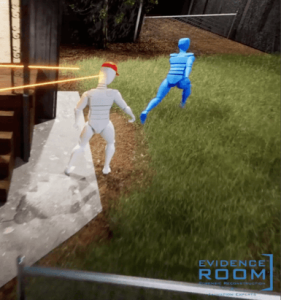 Christopher Dunn’s sister stated that he was at home watching TV from 11:00 p.m. to 12:00 a.m. During this time, his sister recalled Christopher talking on the phone and hearing several shots from a few blocks over. Christopher Dunn was sentenced to life without parole. In 2005 and 2006, both witnesses recant testimony and stated they could not see or identify the shooter due to nighttime lighting, and they stated Dunn was the shooter because they did not like him. After spending 34 years in prison, Christopher Dunn was fully exonerated in 2024.
The Christopher Dunn case underscores the profound impact that eyewitness identification can have on the outcome of a criminal case—and the importance of carefully examining the physical and environmental conditions under which an identification is made. Factors such as nighttime illumination, distance, viewing angle, duration of observation, and the stress of a rapidly unfolding shooting can all affect the visual information available to a witness. Decades after the shooting, a closer examination of the circumstances surrounding the eyewitness identifications became an important part of understanding the evidence in the case. Dunn’s eventual exoneration after 34 years in prison serves as a powerful reminder of why evidence must be continually examined with objectivity, accuracy, and a commitment to seeking the truth.