The new courtroom: true crime media vs. Public perception
 Crime no longer lives exclusively inside the courtroom.
In the modern age of crime and technology, it is easier than ever to witness a case unfold across news broadcasts, documentary series, podcasts, YouTube channels, TikTok videos, and online discussion forums long before a jury is ever seated. Millions of people consume true crime every day, creating a new kind of public forum where evidence is debated, theories are shared, and opinions are formed. The rise of the “armchair detective” has transformed audiences from passive observers into active participants, for better or for worse.
The popularity of true crime is not difficult to understand. For many, it satisfies a natural curiosity about events that seem impossible to comprehend. It offers insight
into how crimes occur, can provide a sense of personal safety, explores the complexities of human behavior, and presents real-life mysteries that invite audiences to solve the puzzle of a case alongside investigators. Above all, true crime tells compelling human stories.
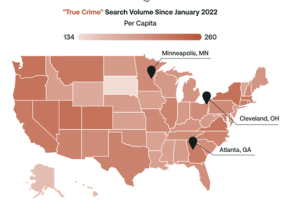 Unlike a courtroom, digital platforms are not governed by rules of evidence. Information is rarely presented with equal weight, opposing viewpoints may receive little attention, and the most emotionally compelling narrative often becomes the most widely shared. Much of the conversation surrounding crime appropriately centers on victims, survivors, and law enforcement. Their experiences deserve recognition and support. However, other voices often receive far less attention, including wrongfully accused individuals, defendants awaiting trial, the families of the accused, and organizations working to overturn wrongful convictions. Their stories are frequently more complex and less easily condensed into viral headlines.
Map shows a 2023 study by Vivint analyzing the amount of searches for “True Crime” in each state. Vivint. (2023, June 14). Popularity and impact of true crime content.
Media coverage itself can further shape public perception through the images and language it chooses. A study by the Equal Justice Movement found that mugshots were used in 45% of
publicized cases involving Black individuals accused of crimes, compared with only 8% of cases involving white defendants. White suspects were nearly four times more likely to be depicted alongside family or friends, while Black individuals were more often represented solely through booking photographs. The study also found that white offenders were approximately 50% more likely to be referred to by name rather than through more impersonal descriptions. These editorial choices may appear subtle, but they influence how audiences perceive credibility, humanity, and guilt before legal proceedings have concluded. Ultimately, true crime media has become an influential extension of the justice conversation. It can educate the public, encourage accountability, expose investigative failures, and even help generate new leads in forgotten cases. At its best, it reminds us that every case involves real people whose lives extend far beyond a headline or an episode. As consumers of true crime, our responsibility is not to stop asking questions—it is to ask better ones. Which cases become national stories? Which victims receive widespread sympathy? Which defendants are publicly condemned before trial? Which wrongful convictions inspire public support, and which remain largely invisible? The courtroom determines legal guilt. Public opinion is shaped somewhere else entirely. Increasingly, that courtroom exists on our screens.
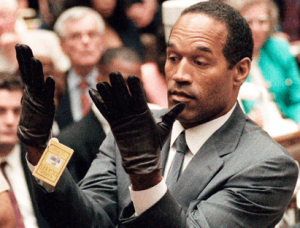 The Trial of OJ Simpson One of the first modern media spectacles, demonstrating how around-the-clock television coverage can shape public opinion long before legal arguments conclude.
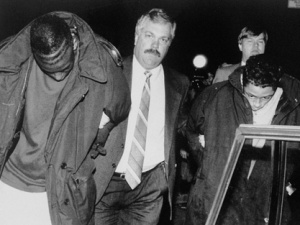 The Central Park 5 A powerful example of how early media narratives and public opinion can contribute to lasting misconceptions—even after wrongful convictions are overturned.
 The Crime Junkie Podcast A worldwide true crime podcast, reaching 22.6 million monthly listeners and logging over 1.5 billion downloads. Its success illustrates how podcasts have become a major force in shaping public understanding of criminal cases through long-form storytelling.