Beyond the scenes: What, Why & Who
A crime scene is just a layer in the complex and complicated story that is a crime and the behaviors and actions that lead to it. Every object moved, used, and left behind helps to paint the picture of a suspect and a motive behind every element displayed in a crime scene. The behavioral science behind crime scene behavior and analysis has only recently come into focus in crime investigation. Things like Modus Operandi, victimology, and behavioral evidence analysis all coincide with one another to create the science of understanding scene behavior.
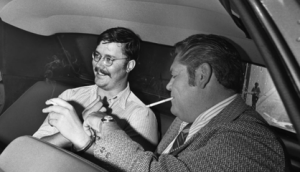 Some of the key elements that investigators assess when analyzing a crime and the behavioral traits connected to it refer to the BSU’s Serial Killer study performed in the late 1970s. This
study brought about the relevance of the Behavioral Science Unit in federal policing and provided a clearer understanding of why psychology is key in criminal investigation. Some of the major concepts derived from the study are organized and disorganized killers, the meaning behind staging a crime, and the way evidence and behavior interact with one another to pinpoint potential suspect characteristics.
Image of Serial Killer Ed Kemper and FBI Profiler John Douglas, talking throughout the “Serial Killer” study that paved the way for understanding the criminal mind.
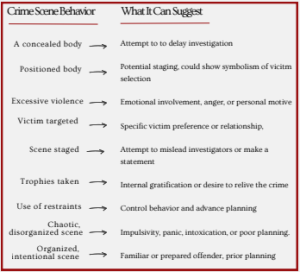 Evidence can suggest a great deal about perpetrators through forensic psychology, which examines how actions correlate with behavior and personality traits. The value of forensic psychology has expanded more and more as the criminal justice system grows its focus on intelligence and understanding of what makes and drives a suspect. A crime scene is more than a visual. It tells a story and reflects the most internal motives
and desires, helping investigative professionals analyze a new lens of suspect assessment.