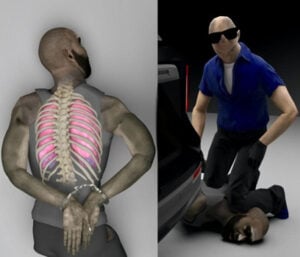
 On May 25, 2020, George Floyd was detained by four Minneapolis police officers after allegedly using a counterfeit $20 bill. After officers attempted to place him in a police vehicle, Mr. Floyd ended up face down on the ground. During the restraint, Officer Derek Chauvin pressed his knee onto Mr. Floyd’s neck for approximately 9 minutes. Bodycam footage captured Mr. Floyd repeatedly stating that he could not breathe and eventually became unresponsive. Mr. Floyd was transported to the hospital and was later pronounced dead. On June 25, 2021, Derek Chauvin was sentenced to 22 ½ years in prison.
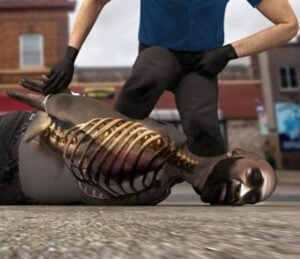 The other three officers were later convicted of violating Mr. Floyd’s civil rights. The circumstances surrounding George Floyd’s death received international attention and sparked protests across the United States and around the world, bringing public attention to police use of force and racial justice. In this matter, reconstruction was important to understanding the physical circumstances of Mr. Floyd’s restraint and the relationship between the officer’s positioning and Mr. Floyd’s ability to breathe. Demonstrating the underlying anatomy and mechanics of breathing helped translate complex medical concepts into a visual format for better understanding. Evidence Room created a forensic and medical reconstruction of the restraint. The team reconstructed the positions of Mr. Floyd and Officer Derek Chauvin and incorporated medical visualization to demonstrate the relationship between the restraint and the mechanics of breathing. The exhibit also addressed the application and use of deadly force, providing a visual representation of the force applied during the encounter and its physical relationship to Mr. Floyd’s body.