Caught On Camera… Or Was It?
WHY VIDEO EVIDENCE IS POWERFUL, BUT RARELY TELLS THE WHOLE STORY
BY SCOTT RODER
There is an old saying in the courtroom that “the camera never lies. ” While video evidence is often among the most persuasive forms of evidence available, the reality is more complicated. Cameras don’t lie, but they also don’t see everything. Over more than 3,000 forensic reconstruction cases, I’ve learned that nearly every type of video evidence has limitations. Resolution, field of view, activation, lighting, audio quality, storage limitations, and simple camera placement can all leave significant gaps in the story. Video is often the best evidence available, but it is rarely the only evidence that should be relied upon.
 Cell Phone Video: The Accidental Witness
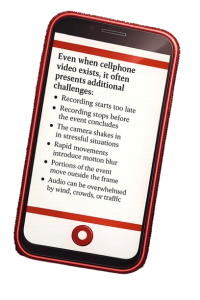
Despite how often cellphone videos appear in the news, it is surprisingly uncommon for a bystander to capture the entirety of a rapidly unfolding criminal event. In more than 3,000 cases I’ve worked, only a small fraction involved cellphone footage that recorded both the moments leading up to an incident and the incident itself. More often, someone hears yelling, a crash, or gunfire, reaches for a phone, unlocks it, opens the camera, and begins recording only after the critical events have already begun—or after they are over. One personal observation: people overwhelmingly record in portrait mode instead of landscape mode. Portrait orientation dramatically narrows the field of view, often excluding important people, vehicles, or environmental context occurring just outside the image. A wider landscape image captures substantially more of the scene and is generally more useful during forensic analysis.
Ring and Nest Cameras: Reliable but Fixed
Doorbell cameras and residential security systems have become invaluable investigative tools. Unlike handheld phones, these cameras are mounted in fixed positions, eliminating camera shake and providing continuous monitoring. Their greatest strength, however, is also their greatest limitation. They cannot follow the action. If an assault occurs ten feet outside the camera’s viewing angle, or a suspect steps behind a parked vehicle or tree, the camera simply cannot record what it cannot see.
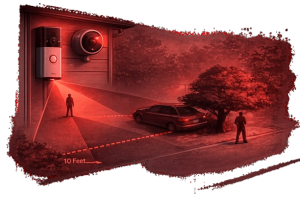 Additional limitations include:
- Fixed viewing angles.
- Limited nighttime
performance. - Variable color or
monochrome
recording. - Audio that may or may
not be available. - Compression that
reduces image quality.
Perhaps the greatest investigative challenge is simply discovering that these cameras exist. Unless investigators canvass the neighborhood quickly, request footage promptly, or obtain legal process when appropriate, valuable recordings may be overwritten or never identified at all.
Commercial Surveillance Systems
Retail stores, parking garages, warehouses, casinos, office buildings, and schools often rely on surveillance systems operating around the clock. These systems provide tremendous value because they frequently capture prolonged timelines before and after an event. The tradeoff is image quality because these systems record continuously, often from dozens or hundreds of cameras; they must conserve storage space. Many accomplish this through lower resolutions, aggressive video compression, reduced frame rates, or scheduled overwriting after a retention period.
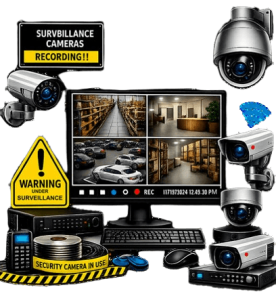 The result is familiar to forensic analysts:
- Subjects appear small within the frame.
- Facial detail may be limited.
- License plates become unreadable.
- Motion blur increases.
- Older recordings may already have been
overwritten.
These systems remain extraordinarily valuable, but they rarely provide Hollywood quality images.
Police Body-Worn Cameras
Body-worn cameras have transformed modern policing by providing an objective record of many law enforcement encounters. Like every camera system, however, they have limitations that are important to understand.
First, body cameras typically require activation, although many modern systems include automatic activation features under certain circumstances. Agencies also differ in their policies, equipment, and configuration. Whether a camera should have been recording in a particular incident is often answered not by speculation, but by reviewing agency policy together with the device’s audit logs and metadata.
Second, camera placement matters because body cameras are generally mounted on the officer’s chest or upper torso; the lens records from that fixed position, not from the officer’s eyes.
As a result:
- A suspect at close range may obscure the camera.
- Physical struggles frequently move outside the field of view.
- The officer’s arms may block the view.
- Wide-angle (fisheye) lenses introduce distortion, making distances and positions
appear different from how they do in person.
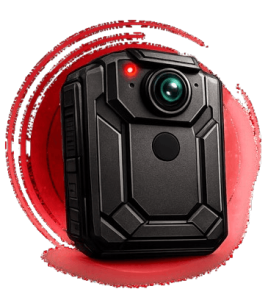 These limitations become especially important during officer-involved shootings or hands-on encounters, where the most critical actions often occur within inches of the camera. One significant strength of body-worn cameras is their audio. Clear audio frequently captures commands, conversations, timing of gunshots, impacts, and other events that help reconstruct an accurate timeline even when the visual image is partially obstructed. Modern systems also maintain detailed electronic records, including activation times, deactivation times, battery status, uploads, and other operational data. Those records can help investigators determine how and when a device was used during an incident.
Dash Cameras
Patrol vehicle cameras provide another important perspective. Unlike body cameras, dash cameras remain fixed to the patrol vehicle and generally offer a stable, forward-facing view. They may capture vehicle pursuits, traffic stops, or events unfolding in front of the cruiser. This footage can help establish vehicle positioning, movement, timing, and the overall sequence of events. When analyzed alongside body-worn camera footage and other available evidence, patrol vehicle video can provide valuable context and help create a more complete understanding of an incident.
 Their limitations are straight forward:
- They only record what is in front of the vehicle.
- Officers frequently move away from the cruiser.
- Critical interactions may occur outside the frame.
- Distance often limits facial detail.
Like body cameras, dash cameras are most powerful when analyzed alongside other evidence rather than viewed in isolation.
The Bigger Picture
Every camera records only a slice of reality. Its perspective is limited by its position, field of view, resolution, lighting, timing, and movement. What appears clear from one angle may look entirely different from another, while critical actions may occur just outside the frame. For that reason, a reconstruction should never rely exclusively on what a single camera happened to capture. Instead, video should be considered alongside physical evidence, scene photographs, measurements, witness statements, forensic testing, digital evidence, timing analysis, and the reconstructed environment. Together, these sources can reveal what the video confirms, what it contradicts, and what it simply cannot answer. Video is one of the most powerful investigative tools ever developed, but it is not an all-seeing witness. A camera cannot capture what happens outside its field of view or automatically provide the context necessary to fully understand an event. Sometimes, what the camera doesn’t show is just as important as what it does. The best reconstruction doesn’t simply ask, “What does the camera show?” It asks, “What actually happened?”