Past Cases Some cases end with a verdict. A few continue long after the courtroom lights go dark. The case of Martin “Marty” Tankleff is one of those rare stories that reminds us why forensic science—and the relentless pursuit of truth—must never stop at a conviction.
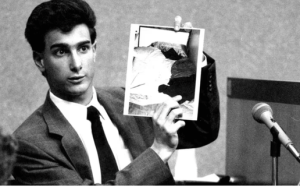 In 1988, seventeen-year-old Marty Tankleff awoke to discover his parents, Seymour and Arlene Tankleff, victims of a brutal bludgeoning and stabbing attack in their Long Island home. During an interview in the interrogation room, Detective K. James McCready falsely claimed that Martin Tankleff’s father had awakened from a coma and identified his son as the attacker. Believing there was no hope, the teenager made statements that prosecutors characterized as a confession. He later recanted, explaining that his admissions were the product of psychological coercion and deception rather than guilt. Despite the absence of physical evidence tying him to the murders, he was convicted and sentenced to prison.
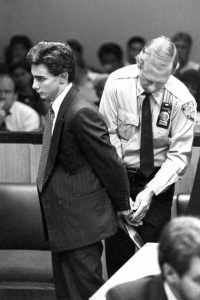 Years later, a coalition of attorneys, investigators, forensic experts, and advocates revisited the evidence. New witnesses emerged, alternative suspects were identified, and the case was reconstructed with fresh eyes. The conviction was ultimately vacated, and Marty was released after spending nearly 18 years behind bars for a crime he did not commit. Evidence Room became involved during the post-conviction litigation by reconstructing the physical evidence and bloodstain patterns associated with the murders. Our assignment was not to tell a different story—it was to determine whether the story told at trial was consistent with the forensic evidence.
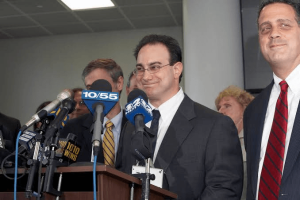 After being released, Marty earned his law degree, was admitted to the New York Bar, and became a criminal defense attorney dedicated to representing others caught in the same nightmare he endured. Today, he serves as an Adjunct Professor of Law and Peter P. Mullen Distinguished Visiting Professor at Georgetown University, where he co-leads the groundbreaking Making an Exoneree program with Professor Marc Howard. Students reinvestigate potential wrongful conviction cases, produce investigative documentaries, and develop public advocacy campaigns that have helped secure the release and exoneration of innocent people across the country. Life has a remarkable way of coming full circle. Years ago, Marty Tankleff was the subject of one of our forensic reconstructions.
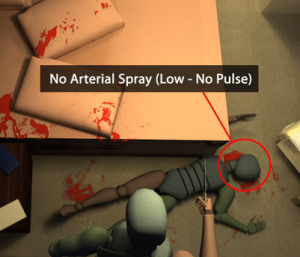 Evidence Room was tasked with reconstructing the physical and bloodstain evidence to determine whether it was consistent with the prosecution’s theory.
Physical evidence has no memory to distort. It has no political affiliation. It has no emotional investment. It simply exists, waiting to be interpreted correctly. But perhaps the most remarkable part of this story occurred after Marty walked out of prison. Many people wrongfully convicted struggle to rebuild their lives after losing decades to incarceration. Marty chose another path. The reconstruction required careful documentation of the blood evidence, injury patterns, and movement within the residence. While the imagery was necessarily graphic, it served a singular purpose: to objectively evaluate whether the physical evidence supported the prosecution’s theory of a lone teenage assailant. As in every reconstruction, our responsibility was not to advocate for a particular outcome, but to allow the evidence to speak for itself.