From Art School to the Courtroom The Unexpected Career Path of a Forensic Animator
 When I tell people I studied Art in college, they tend to think of painters, sculptors, and graphite artists. Many are often caught off guard with the answer I give:
“I reconstruct crime scenes.”
I didn’t know forensic animation was a career until I was trying to figure out what I wanted to study in college. I always excelled in art classes and creative spaces, but I never felt fulfilled by traditional artistic paths. I wanted my art to serve a purpose beyond
aesthetic beauty. At the same time, I had an interest in science that lingered in the back of my mind, though I didn’t yet realize it would eventually shape the direction of my career. When it came time to choose a major, I was torn between forensic science a nd digital arts. I loved the creativity and problem-solving that came with art, but I was equally drawn to the analytical nature of science. One question kept coming to my mind:

Why can’t I do both?
The answer was forensic animation, a career I have never heard of prior. As I learned more about the field, I realized it offered exactly what I had been looking for. It combined the creativity of digital art with the analytical thinking of forensic science, allowing me to apply my artistic skills in a meaningful and practical way. From then on, I knew it was the career path I wanted to pursue.
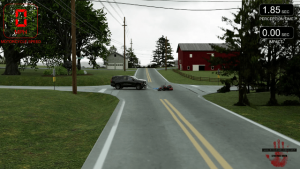 Why Forensic Animation?
As an artist, I wanted my work to answer the world’s questions rather than simply ask them. For me, forensic animation satisfies not only my passion for creating but also my desire to make a meaningful difference in the lives of others. Every case presents a unique story, a new challenge, and often a profound impact. That responsibility continually motivates me to refine my craft and approach each project with care.
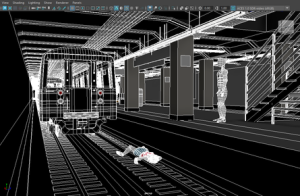 It is deeply rewarding to transform a collection of reports, measurements, photographs, and diagrams into a visual reconstruction that people can understand. What begins as pages of technical information becomes a clear representation of events. Rather than asking viewers to imagine a complex situation, forensic animation allows them to see it unfold in a way that is both engaging and easier to comprehend. Whether illustrating evidence placement, demonstrating the movement of people or objects, or visualizing medical findings, forensic animation serves as a bridge between technical information and human understanding. It helps communicate complex concepts to audiences with diverse backgrounds, enabling investigators,
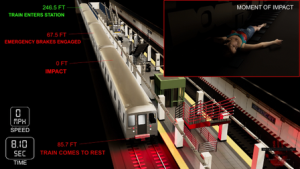
attorneys, judges, and jurors to better understand the evidence before them. Knowing that my artistic skills can contribute to that understanding is what makes this career so personally fulfilling.
The Best of Both Worlds
My work goes far beyond creating animation. Each reconstruction requires a balance of artistic, technical, and analytical skills, all working together toward one goal: communicating complex information clearly and accurately.
| Artistic Skills | Technical Skills | Analytical Skills |
|---|---|---|
| Composition | 3D Modeling | Critical Thinking |
| Color and Lighting | Animation | Problem Solving |
| Visual Storytelling | Rendering | Attention to Detail |
| Perspective | Video Editing and Compositing | Observation |
| Photography | Motion Graphics | Research |
| Graphic Design | Digital Scene Construction | Communication |
When people ask what I do, I tell them I reconstruct crime scenes. While it may not be the answer they expect from someone with an art degree, it’s exactly the kind of artist I hoped to become one whose work helps answer questions, communicate complex ideas, and make a meaningful difference.